

Underdog to Top Dog, the Quest to Expand Our Capacity for Challenges using Breathwork
The Great Aussie Battler
In Australia, we love the underdog. The struggler, the battler.
The one we least expect to overcome adversity. The least likely to come out on top. The one considered weaker of the opponents. Less powerful, less funded, and unfairly treated, less just. The one entrenched in some kind of adversity, struggling for success.
We love to see them rise to the top. And take out that poppy. The tallest one, with its neck stuck out.
Whether it’s a tennis player two sets down, or a golfer trapped in the bunker, or an unlikely kid from the country in the surf about to drop in on a huge wave, or a formula one racing car driver on the start grid trapped without a finished race in the season, we all identify with that nature. The nature of rising to the occasion, no matter if it’s a win or not. Whether you have the strength, profile, training, intellect, experience, conditioning, or, the physique, it doesn’t matter. The streak of failures, only give more power to the battle. The struggle. The fight.
And what is it that the underdog represents in that moment? In the expected loss, the predicted stumble and fall?
When they rise, when they don’t give up. When they battle to the end, feverishly hanging on, with true grit. Even if they lose, they’re a winner in our eyes.
The magnificent contest of life. Never having all the things we need to triumph. Always scratching, scraping and toiling for that lucky break.
The underdog.

Ultimate in Resilience
We love to see them face those seemingly insurmountable challenges and difficulties. To see their toughness revealed. To watch them stand up tall in the uglier face of adversity and see if they then have the capacity to withstand the pressure. Will they recover from the bad luck? Will they spring back and unleash the power of their elasticity and succeed? Can they draw upon what little resources they have and look out through optimistic eyes?
The underdog represents the ultimate in resilience. They get through tough times and they’re still happy. They showcase their mental, emotional, and behavioural flexibility and adjustment to external and internal demands. They’re tough. They get it done.
We’re all underdogs in some way.
Maybe it’s not on the sporting field. Maybe it’s in corporate rooms. Or university halls. Maybe even just at the supermarket. Or some thirty metres under the sea. Or 1800 metres high up a mountain.
The Mighty Come-Back
Whatever our favoured place, way of being, or vocation, we humans adapt. And everyone has the makeup to practice and cultivate greater resilience. All we need to do is arm ourselves with tools to evoke positive adaptation.
When you think of your daily life, when do you feel like the underdog? The battler?
And when you think of daily life, when do you feel like the top dog? The winner?
And what were the missteps, trips, falls and failures, and hard work, practices, concentration and commitment that brought you to the sensations of the top dog?
Our impression of resilience changes with our perception of our place in the arena. But what if we could, irrespective of the arena, bring about sensations of being able to quickly recover from the difficulty, to regain poise and composure, to triumph in the face of adversity. To evidence the mighty underdog come-back, but with the consistency of the top dog?
We can.
And there are some simple tools to assist along the way.
The Keys to Resilience
For over 10 years I’ve been teaching freediving, where people learn to hold their breath and dive under the sea to move about freely. As one of a very few qualified PADI Freediver Instructor Trainer’s in Australia, I also teach freedivers to become instructors.
In my experience, the attraction to freediving from my students has predominantly been the peace, calm and contentedness that they feel immersed under the sea. A feeling that they’ve not necessarily been able to evoke as strongly in other activities, though they may have tried.
In those moments underwater moving freely about the ocean on one beautiful calm breath, life slows down, the mind becomes quiet, and time ceases to exist.
It’s not a moment that just happens on the first attempt. Freedivers in the marine habitat are the underdogs. We don’t have all the natural abilities of dolphins, seals or whales, but we do have the hallmarks. We’re similar to dolphins in the way we adapt to diving holding our breath, and the way we use the water space, but dolphins are far more suitable to frolicking freely below the surface than we may ever be.
It doesn’t hold us back from trying though. Instead, that sensation of freedom keeps and sustains the motivation to learn, adapt and practice techniques that promote further exploration of how that feeling can permeate life above the ocean’s surface too.
And when we strip away the activity or function of freediving, it’s this core element of breath-hold that is the key to enhancing resilience. Indeed, we can learn a lot from freediving and take those elements to apply to life in the every day.

Increasing Tolerance to Stress
Breath-hold training performed the right way, whether in the water or on land, aids in increasing tolerance to stress and improves mental focus.
When trained in a controlled environment, guided closely with real-time feedback under supervision, the exposure of the body to mild stress through slow and measured introduction of air hunger, triggers positive adaptations and build’s the body and mind’s ability to handle challenges. To become more resilient.
This is why freedivers get hooked on freediving. It’s not possible to plunge down to 100m depth because you feel like it. It all starts slowly. There’s a progression that occurs, and it’s not linear. Some days the breath-hold feels easy. Other days it feels as if you’re just barely hanging on to life itself.
Freediving forces you to build the calm on the surface, using breathing techniques that bring calm and composure. And when you feel ready, you choose to slip under the surface on that one calm inhale, with mind and body in a state of moving meditation. Underwater you begin to look inside yourself, to become aware of the sensations moving within, the thoughts that come and go, the body’s response to the pressure and how it moves through liquid, suspended.
Approaching the Threshold
Taking your attention outside, you look around, monitoring the environment for features, looking for other life forms, maintaining your position relative to the outer world, and the surface. Over time, you begin to recognise consistencies in your dives, gradually building familiarity and comfort with what it takes to prepare properly on the surface, to find the calm, take it with you, and return to the surface to begin the cycle again. It’s all a choice.
You learn how to move from comfort to discomfort, and back again. Your comfort capacity increases, as does your ability to accept discomfort, all by choice, not by forcing yourself to suffer.
It’s a repertoire that plays with this very threshold between applying mental focus and expanding tolerance for stress, with self-awareness and intentional choices. And, it’s completely transferable to regular life. In fact, even better, it’s accessible no matter if you have no desire to freedive.
The power is in this programmatic introduction of the sensation of air hunger, balanced with the cultivation of processes to build calm and poise. It’s not about increasing suffering and forcing one’s self to endure it to grind into perceived growth.
This is instead growth that is a by-product of visiting the grey area. The invisible zone just before the threshold that plunges us into sufferance. The zone that expands and contracts and moves closer and further away on a daily basis. In this zone, if we approach it in a developmental way, it’s where we unknowingly find expansion and improvement, without extra effort. It evolves through regular attention and practice.
Techniques to Help Regulate
In breathwork, to begin to enhance our levels of resilience, first we must establish the foundations of personal breathing awareness and the modelling of proper breathing techniques and functional breathing. Then what naturally flows is the ability to better understand, identify and adapt to the tolerance of higher levels of carbon dioxide. Carbon dioxide being the critical component in our stimulus to breathe.
As the awareness and adaptation progresses, breath-hold training enhances the efficiency of breathing, and in developing higher tolerance of increased carbon dioxide levels, we are able to benefit the aspects of ourselves in both physical and mental resilience, expanding our capacity to face and recover quickly from challenges.
These techniques are readily accessible to you! As little as 5 minutes of breathwork can begin to reap rewards.
The slowing of a racing mind. Relieving anxiety and panic disorders. Bringing a feeling of calm relaxation.
Techniques that help you up- and down-regulate your nervous system to improve your performance in the face of adversity, to aid your recovery, and build your resilient capacity, all just by breathing differently.
Are you ready to begin your quest to face and explore those seemingly insurmountable challenges and difficulties with a new approach?
Here’s a few ways how:
Online Breathwork Courses, Coaching and Books
Learn more about Breathwork and begin your own Oxygen Advantage online training right now. Check out the Online Breathing Course for Performance page for more information.
Ask me about breathwork coaching (available readily in person across VIC, ACT and NSW, and other territories via online meeting). Choose one-on-one development or private small group breathwork coaching training. Visit the coaching page to apply or make an enquiry.
Use the Oxygen Advantage Smartphone App to apply breathing exercises to your every day using the App.
Read a few books by Breathwork expert and Oxygen Advantage Founder, Patrick McKeown –
The Oxygen Advantage – Available on Amazon
The Breathing Cure – Available on Amazon
Images & Words by Marlon Quinn
Coaching and Photoshoot
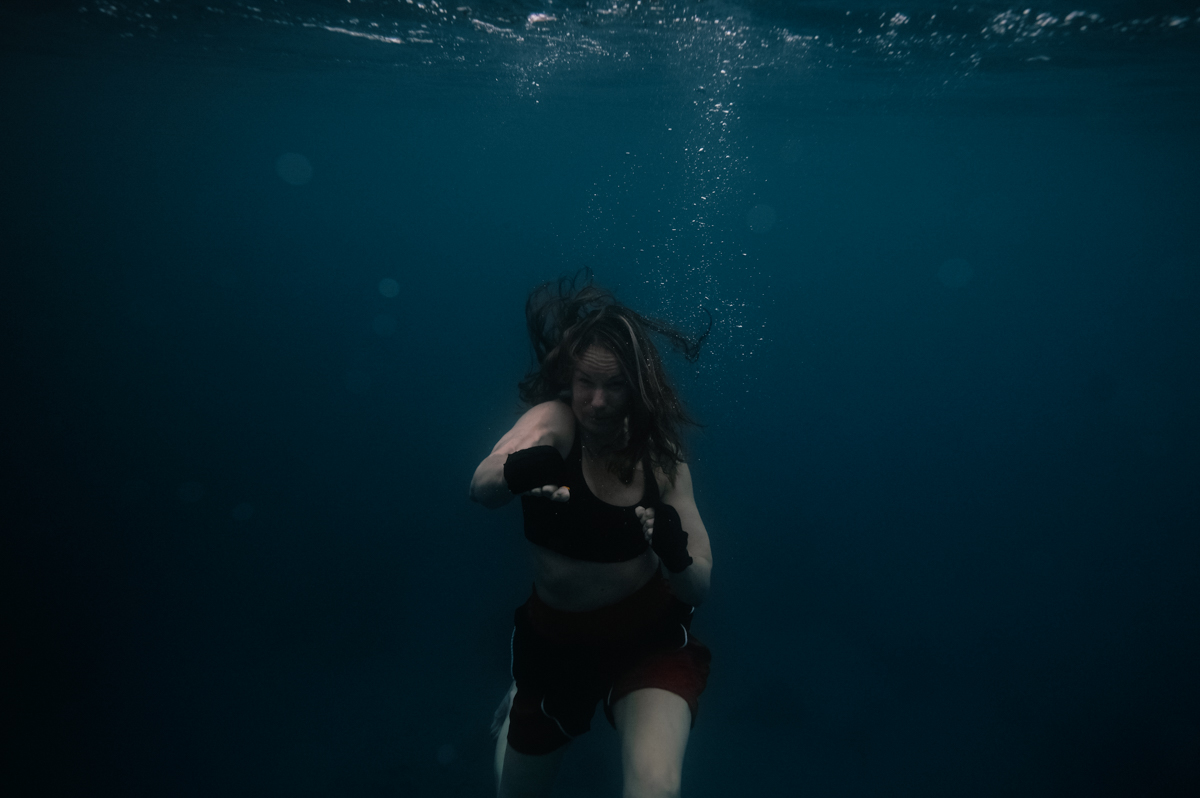
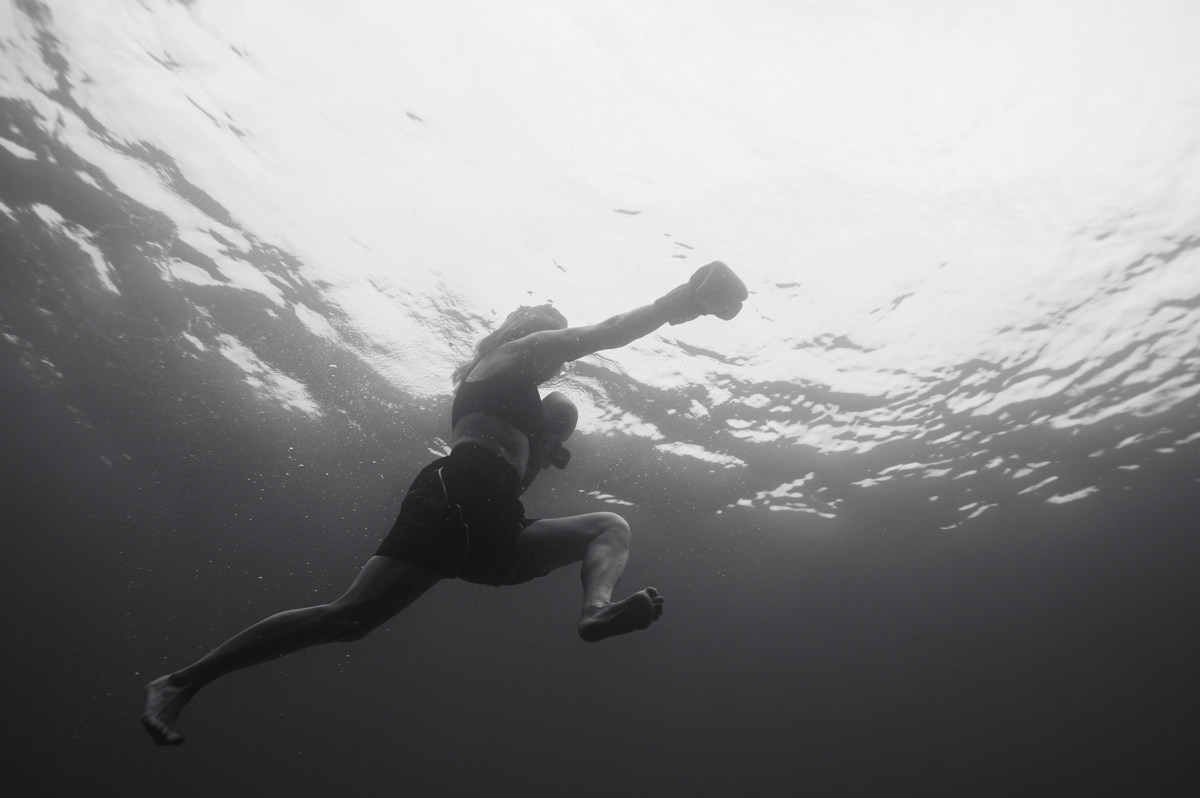
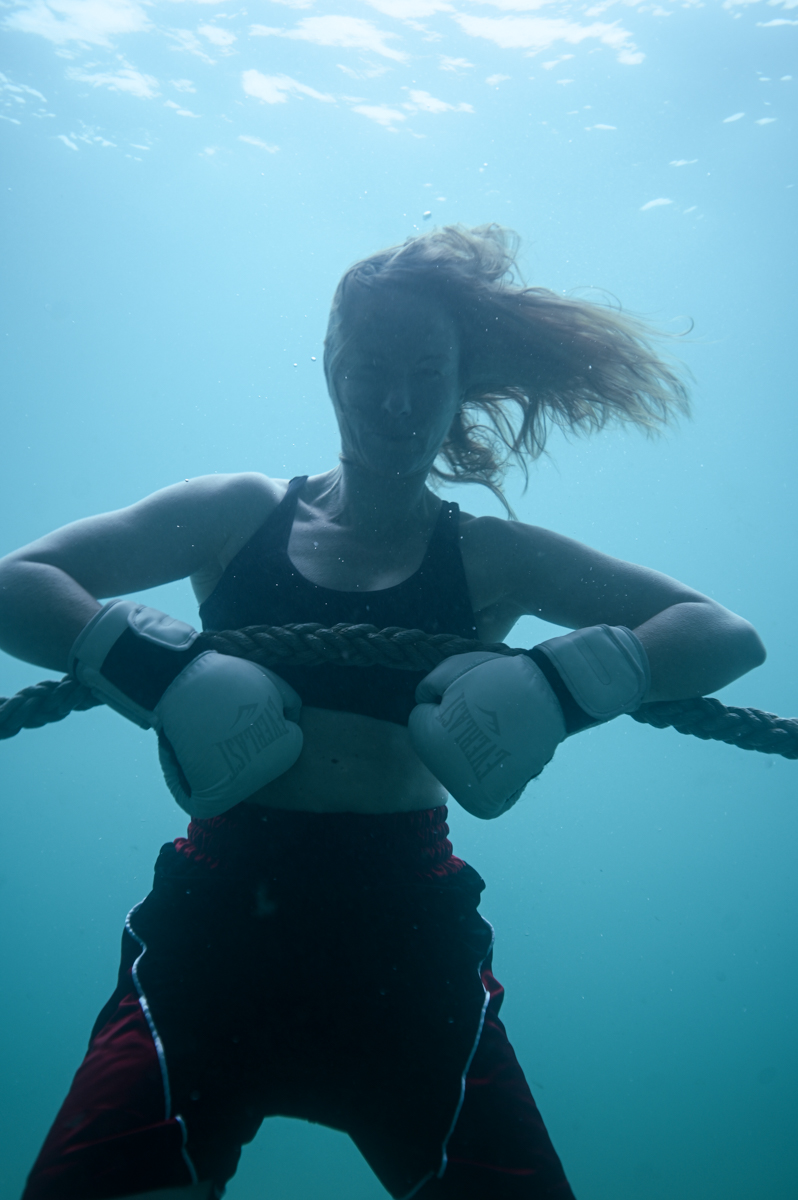
A very special thanks to Shanyn for the awesome underwater images in this post. We undertook a double freediving session on a cloudy, rainy and cold late April morning. The first freediving session in wetsuits, we worked on building underwater comfort, connection with the water, and allowing the freedom of movement to be evoked, even in the pouring rain. After almost 2 hours, we had a short break and then moved sites to undertake the photoshoot. For more than another hour in 16-17c water Shanyn moved around the sea in nothing more than boxing gear, continuously submerging on one breath unable to see, and evoking the spirit of the fine warrior that she is.
Keen to undertake your own private coaching session or a photoshoot? I am a certified Oxygen Advantage Functional Breathing Coach and PADI Freediver Instructor Trainer, please contact me!
Thanks for reading this post and I hope your next adventure into the wilderness is as mind opening as my experience.
Marlon Quinn
0 Comments